
5 Signs Your Professional Headshot Is Costing You Opportunities
There is a version of you that shows up on LinkedIn, on your company website, in your email signature and in search results before you ever say a word. Most people set it up once and forget about it.
That image is working right now. The question is whether it is working for you.
After 26 years of photographing professionals across the Bay Area, I have heard every version of "I keep meaning to update mine." I have also seen what happens when people finally do. The difference a single image makes is not subtle.
Here are five signs the headshot you have right now is costing you more than you think.
1. You Hesitate Before Sharing Your LinkedIn Profile
This is the one most people recognize immediately when I say it out loud.
You are in a conversation, someone asks for your LinkedIn, and there is a split second of hesitation. Not because you do not want to connect. Because you know what they are about to see.
That hesitation is information. Your headshot should never be something you apologize for or explain away. If you are prefacing it with "I know I need to update my photo," you have already answered the question.
2. Your Headshot No Longer Looks Like You
Headshots age faster than people expect. A photo that felt current three years ago often reads as dated today, not because the image is bad, but because you have changed.
A new role, a different style, a shift in how you carry yourself professionally. Your image should match who you are right now, not who you were when you were still building toward where you are today.
If someone meets you in person after seeing your headshot online and does a visible double take, it is time.
3. It Was Not Taken by a Headshot Specialist
There is a meaningful difference between a photographer who does headshots and a photographer who specializes in them.
A wedding photographer, a family portrait photographer or a talented friend with a good camera will often produce an image that looks fine. Fine is not what your reputation needs.
Headshot photography is a specific discipline. It involves understanding light for facial structure, directing expression without stiffness and knowing exactly what a professional image needs to communicate in a thumbnail, a print and everything in between. Specialization matters here more than most people realize before they have seen the comparison.
4. Your Photo Does Not Reflect Your Current Level
This is the sign that surprises people most.
You have put in the work. You have moved into leadership, built a practice, grown a business or established a reputation in your field. And your headshot still looks like it was taken when you were three positions ago.
The people you are trying to reach form an impression before they ever speak to you. That impression should reflect the professional you are today, not the one you were when you were still figuring it out.
Your image should carry the same weight your reputation does.
5. You Keep Putting It Off
This one is the most honest sign of all.
Most professionals know their headshot needs updating. It stays on the list because it feels like a vanity project, or because they are not sure they will like the results, or because the last session was uncomfortable.
Here is what I know after photographing thousands of professionals: the discomfort is almost always about anticipation, not the session itself. My clients regularly tell me they expected to hate it and ended up with images they are genuinely proud of. Getting there starts with booking the appointment.
What to Do Next
If two or more of these signs sound familiar, your headshot is working against you. The fix is straightforward.
A session at my private studio in downtown Pleasanton takes about an hour. You leave with images that reflect who you are at your best, without the stiffness most people associate with professional photography.
I work with executives, entrepreneurs and professionals throughout the Tri-Valley including Pleasanton, San Ramon, Danville, Dublin, Livermore and Walnut Creek.
Book your session here or contact me to talk through what you need.
Frequently Asked Questions
How often should I update my professional headshot?
Most professionals benefit from updating their headshot every two to three years, or sooner after a significant change in appearance, role or personal brand direction.
What makes a headshot photographer different from a general portrait photographer?
A headshot specialist focuses exclusively on professional portraiture. That means specific training in expression coaching, professional lighting and understanding what makes an image work across digital and print contexts.
How long does a professional headshot session take?
At my Pleasanton studio, most sessions run between 45 minutes and 90 minutes depending on the number of looks and the scope of the session.
Where is your headshot studio located?
My private studio is at 4725 1st Street in downtown Pleasanton, California. I serve clients throughout the Tri-Valley and greater East Bay.
How to prepare for your first headshot session
Most people spend too much time thinking about how they want to look and not enough time thinking about where the images need to work. After 26 years of photographing executives, entrepreneurs and professionals, that is the single most useful thing I can tell you before your session.
When you know the job the image needs to do, every other decision follows from that.
Here is everything else worth knowing before you arrive.
Start With the Purpose, Not the Pose
Before you think about what to wear or how to stand, answer this question: where are these images going?
A LinkedIn profile photo has different requirements from a board bio. A speaking submission has different requirements from a company website. A press feature has different requirements from a book cover.
The images that work best are the ones built around a specific purpose. So before your session, write down the three places your images will be used most. Bring that list with you. It will shape every decision we make together.
What to Wear - The Practical Guide
Wardrobe is where most headshot sessions succeed or fail before they start. Here is what 26 years of looking at images tells me works.
Solid colors photograph better than patterns almost every time. Busy prints, stripes and logos compete with your face for attention. A clean, solid color keeps the focus where it belongs.
Mid-tones and deep tones tend to read well on camera. Navy, burgundy, forest green, charcoal, warm grey and camel all translate well across different backgrounds and lighting setups. Pure white can blow out under studio lighting. Pure black can flatten depending on the background choice.
Fit matters more than style. A well-fitted jacket in a classic color will photograph better than a trendy piece that does not sit right on your frame. If something pulls, bunches or gaps when you sit or stand, leave it at home.
Do not wear something for the first time. This is one of the most common mistakes. A new blouse, a jacket you just picked up, shoes you have not broken in. Unfamiliar clothing makes you feel self-conscious and it shows. Wear something you know, something you have moved in before and something you feel like yourself in.
Bring more options than you think you need. For a Signature session I recommend three to four distinct looks. Not three variations of the same look. Three genuinely different outfits that could each serve a different professional context. The variety in the final images comes directly from the variety in what you bring.
Think about what your professional peers wear, not what you wish you wore. The goal is to look like the most credible version of yourself in your actual professional world. If everyone at your firm wears suits, wear a suit. If your industry is creative and a blazer would feel out of place, wear what fits your world.
Hair and Makeup
For women, hair and makeup should be session-ready when you arrive. Not every-day ready. Not evening-ready. Session-ready, which is slightly more polished than your daily look because the camera flattens features and softens contrast.
A few specific notes worth taking seriously.
Avoid shiny or reflective products on your skin. They catch studio light in ways that are difficult to retouch and create an uneven look across the final images.
Hair should be styled in a way you are comfortable moving in. If you typically wear your hair up, bring what you need to wear it down as well. Variety in hair creates variety in looks even within the same outfit.
Professional hair and makeup is available at the studio for an additional fee. If you are booking a Signature or Creative Suite session and have never had professional makeup applied for photography, it is worth considering. The difference in how your skin reads on camera is significant.
For men, a fresh shave or a well-groomed beard the morning of your session. Haircut should be scheduled at least a week in advance so any freshly cut lines have time to settle.
The Night Before
Get a reasonable amount of sleep. This sounds obvious but it is worth saying because eyes and skin tell the story of the night before. A tired face is a harder face to photograph, not because of what the camera sees but because of what it reveals.
Avoid alcohol the night before if you have a morning session. It affects skin tone and eye clarity in ways that matter under studio lighting.
Drink water. Hydrated skin photographs better than dry skin regardless of how much retouching happens afterward.
What to Bring
Your outfits in a garment bag so they arrive unwrinkled. A steamer or iron if you are travelling any distance.
Any accessories you are considering. Jewelry, ties, scarves. Bring the options and we will decide together what works with each look.
Your glasses if you wear them regularly. We will photograph you both with and without so you have options.
A list of where the images will be used. As mentioned above, this shapes the entire session.
Any reference images you have collected of headshots you responded to. Not for me to copy them but to understand what appeals to you visually. That is useful information.
What to Expect When You Arrive
You will be greeted, shown around the studio and given a few minutes to settle before we shoot a single frame. The plan for the session will be walked through before anything happens. No surprises.
Direction is provided throughout the entire session. Posture, angles, expression, where to put your hands - specific guidance at every moment. You will never be left wondering what to do or whether something is working.
Before you leave, we review your images together. You see your selects before you walk out the door. You know exactly what you are getting. Nothing is left to guesswork.
The One Thing Most People Get Wrong
They practice poses in the mirror the night before.
Do not do this. Practiced poses look practiced. What the camera responds to is genuine expression, genuine presence and a specific moment where something true is happening in your face.
My job is to create the conditions for that moment and to direct you into it. Your job is to show up rested, prepared and willing to be directed. Everything else is my side of the camera.
A Final Note on Camera Anxiety
Most people who sit down in my studio say some version of "I hate having my photo taken." That is not an obstacle to a great session. It is actually a useful starting point because it means you are not going to come in with fixed ideas about how you should look.
The direction I provide is specific enough that you will not feel lost, and relaxed enough that you will not feel stiff. Most clients tell me afterward that the experience was nothing like they expected.
If you are anxious about your session, the most useful thing you can do is arrive a few minutes early, give yourself time to settle and trust that direction is coming. The camera does not capture who you are afraid you look like. It captures who you actually are when someone knows how to look.
Ready to Book?
A detailed prep guide is sent with every booking confirmation so you arrive knowing exactly what to bring and what to expect.
Nina Pomeroy is a headshot and portrait photographer based in Pleasanton, California with 26 years of experience across two coasts. She photographs executives, entrepreneurs and professionals throughout the Tri-Valley and East Bay from her private studio in downtown Pleasanton.
What to wear for a professional headshot
Being prepared for your session is one of the biggest factors in how your headshot comes out. The choices you make beforehand about wardrobe, hair and makeup shape the result as much as anything that happens in the studio. Here's a compilation of tips I’ve put together over the years of figuring out what works and what doesn’t. These aren’t hard fast rules, but merely suggestions.
Wardrobe: What to Wear
Stick to solid colors Solid colors almost always outperform patterns on camera. Busy prints, stripes and bold graphics draw attention away from your face and date quickly. A solid color in a flattering shade keeps the focus where it belongs.
What colors are best for headshots Navy is the most reliable choice across all skin tones, it reads as professional and photographs cleanly against most backgrounds. Other strong options include jewel tones (burgundy, forest green, sapphire, plum), charcoal, muted warm neutrals and dusty pastels.
Colors to avoid White and off-white tend to wash out against light backgrounds and create exposure challenges. Beige and tan often blend into skin tones. Neon and highly saturated colors pull attention away from your face.
Fit matters Clothing should fit well, not too tight, not too loose. Anything that bunches, pulls or gaps will show on camera.
Bring options Select 2 to 3 outfits for consideration. Different colors and necklines give you variety across your final gallery, a more formal look for your company website, a slightly more relaxed look for LinkedIn, a bolder color for a speaking bio.
A note on black Black photographs well when it's a true, deep, fresh black. Faded or washed-out black reads poorly on camera. If you're wearing black, make sure it's freshly laundered and free of lint.
Makeup Tips for Headshots
Why headshot makeup is different The camera picks up more detail than the eye does. Makeup that looks natural in person can read as too light on camera, and makeup that looks overdone in person can look perfectly natural in photos. The goal is a polished, even look that doesn't call attention to itself.
Foundation and base Your base is the most important step. Make sure your foundation matches your natural skin tone exactly, particularly at the jaw and neck. A mismatched foundation line shows clearly in photos. Set your base with powder to reduce shine, as the studio lights pick up oil and sheen quickly.
Eyes Defined eyes read better on camera than bare ones. A neutral eyeshadow, defined lashes and a subtle liner help your eyes show up clearly without looking overdone. Avoid very dark or smoky looks unless that's genuinely part of your personal brand.
Lips A neutral to slightly deeper lip color photographs well. Very light or nude lips can disappear on camera. Avoid glossy formulas, matte or satin finishes hold up better under studio lights.
Avoid shimmer and glitter Highlighter, shimmer eyeshadow and glittery products reflect studio lighting in ways that create distracting bright spots. Stick to matte and satin finishes throughout.
Professional makeup services Professional hair and makeup is available through Nina's preferred artists, who understand what reads well on camera for a professional headshot. If you're considering it, ask when you book, it's worth the investment.
Touch-up kit Bring your makeup for touch-ups during the session. Blotting papers, powder, lip color and anything you used for your base are all worth having on hand.
Hair Tips for Headshots
Keep it simple and controlled The most common hair mistake in headshots is flyaway or frizzy hair that distracts from the face. Whatever your natural style, the goal is a version of it that's clean, controlled and intentional.
Freshly washed or styled Show up with hair that's freshly washed or professionally styled. Avoid dry shampoo overload, it creates a dull, powdery texture that reads flat on camera.
Avoid major changes right before your session A new haircut or color right before your session is a risk. If something doesn't go as planned, there's no time to correct it. Schedule any significant changes at least two weeks before your session.
Longer hair If you typically wear your hair down, bring the tools to put it up as well. Having both options gives you variety in your gallery, some clients find they prefer a more polished updo for their corporate headshot and their natural style for LinkedIn.
Men's grooming Freshly groomed is the right call. A haircut and fresh shave or trim of any facial hair within a day or two of the session makes a visible difference. Avoid heavy product that makes hair look wet or overly styled.
The studio has a steamer and a dressing area If anything needs a quick refresh when you arrive, the studio is set up for it.
Quick Reference Checklist
Before your session, run through this list:
2 to 3 solid color outfit options packed and pressed
Lint roller in your bag
Foundation that matches your skin tone at the neck
Makeup touch-up kit
Hair tools if you want an updo option
Glasses if you typically wear them
Any props relevant to your personal brand
Frequently Asked Questions
Should I get professional hair and makeup for my headshot? It's worth considering. The camera picks up more detail than the eye does, and professional makeup artists who work with photographers know how to produce results that look natural on camera. Ask when you book.
What if I don't wear much makeup? That's completely fine. A light, even base and some definition around the eyes is enough. The goal is a polished version of how you normally look, not a transformation.
Should I get a haircut before my session? If you're planning one, schedule it at least a week before the session so it has time to settle. Last-minute cuts are a risk if the result isn't what you expected.
What if I'm not sure what to wear? A wardrobe prep guide is sent with every booking confirmation. If you'd like specific feedback on your options before the session, send photos and Nina will weigh in.
It's Not Just For The Money
I’m often asked—especially by newer entrepreneurs—why I donate my sessions and packages to non-profits.
“How can you afford to give away so much of your time and talent… for free?”
It’s a fair question.
The truth is, I’m able to give because of my paying clients. They are the foundation of my business, and because of them, I can support not only my family, but also the causes that matter deeply to me.
And while I absolutely love what I do, this business is not a hobby.
After 26 years, I can tell you—running a photography business comes with real costs. Equipment, insurance, software, rent, marketing, taxes… it all adds up quickly. From the outside, entrepreneurship can look like freedom and flexibility—and yes, it is—but there’s also a significant investment behind the scenes.
Still, giving back has always been a non-negotiable for me.
Over the years, I’ve supported many local organizations in different ways—from silent auctions benefiting education programs, to providing portraits and headshots for women and children through Shepherd’s Gate, to serving as a board member for Tri-Valley REACH, supporting adults with developmental disabilities in independent living. I’ve also had the honor of working with Portraits for Patriots, offering headshots to military members transitioning into civilian life.
And that’s just a small glimpse.
Here’s the part most people don’t realize:
Many silent auction sessions are purchased below the actual cost of providing them.
And I still say yes.
Not because it’s a marketing strategy.
Not because I expect anything in return.
But because I believe in showing up for my community.
Whether someone is a full-paying client or an auction winner, they receive the same level of care, attention, and experience in my studio. That standard doesn’t change.
Of course, I hope people recognize the value of what they’ve received. And yes, there have been moments where that generosity hasn’t been fully understood.
But that doesn’t change why I do it.
I don’t give to be seen.
I give because it matters.
Because I believe local businesses have a responsibility—not just to grow, but to contribute. And that doesn’t always mean giving something away for free. Sometimes it’s your time. Your expertise. Your presence.
For me, this work has never been just about the money.
It’s about impact.
Grandparents love in pictures
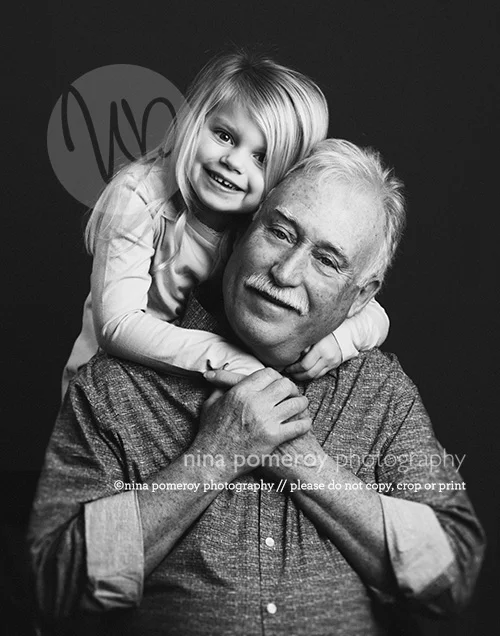
I will admit, this is one of the most lovable grandfather's I've come across. You can see in his eyes that this little girl holds such a special place in his heart. Before I met her, he would talk about her all the time. He had photos of her on his hair styling station at his hair salon in Walnut Creek. Their bond is undeniable and I just knew that I had to have them come into my Pleasanton Studio to be photographed as one of the very special pairs in my grandparent/grandchild project titled “My First Best Friend.”
If you know of someone who talks endlessly about their grandchild and is completely smitten, I’d love to meet them and have them come into the studio!
The Pitfalls of AI Headshots
We’ve all seen the rise of AI-generated headshots—just upload a selfie, and voila! You’ve got a “professional” headshot. But are these quick fixes really giving catching the “right” attention from the viewer?
Don’t fall into the AI trap. Why is investing in a real, authentic headshot is worth it?
1. The Temptation of the 'Quick Fix'
AI headshots often appeal to those who are short on time or looking for a cheaper option. It might seem like a great solution for those who aren’t ready to invest in themselves or may not understand the value of a professionally crafted headshot.
2. Who Falls for an AI Headshot?
New Professionals: People just starting their careers, not yet understanding how crucial personal branding is.
Cost-Savvy Entrepreneurs: Small business owners trying to save money, even if it means cutting corners on their client-facing image.
Tech Enthusiasts: Those who love to try the latest tech trends without considering if it’s the right fit for them.
Quick Fix Seekers: People who want something fast, thinking it’ll do the job—until they see the results!
3. The Problem with AI Headshots
AI-generated headshots can look generic, overly retouched, and often fail to convey the warmth, personality, and approachability that a real headshot does. You’re essentially left with an image that looks more like a 3D avatar than your true self.
4. Why a Professional Headshot is the Way to Go
Personal Connection: A good headshot isn’t just a picture, it’s a reflection of you. It shows your personality, approachability, and professionalism.
Expert Guidance: A headshot specialist photographer can coach you through posing, lighting, and wardrobe to make sure your look your very best self.
Investment in Your Future: An authentic headshot speaks volumes to potential clients, employers, and collaborators. It shows that you value yourself and your brand.
So while AI-generated headshots might seem convenient, they lack the personal touch and authenticity that only a professional headshot photographer who specializes in headshots. In the end, nothing beats investing in yourself and working with someone who truly understands how to capture the real you.
Besides, if you won’t invest in yourself, why should anyone invest in you and your business?