How to prepare for your first headshot session
Most people spend too much time thinking about how they want to look and not enough time thinking about where the images need to work. After 26 years of photographing executives, entrepreneurs and professionals, that is the single most useful thing I can tell you before your session.
When you know the job the image needs to do, every other decision follows from that.
Here is everything else worth knowing before you arrive.
Start With the Purpose, Not the Pose
Before you think about what to wear or how to stand, answer this question: where are these images going?
A LinkedIn profile photo has different requirements from a board bio. A speaking submission has different requirements from a company website. A press feature has different requirements from a book cover.
The images that work best are the ones built around a specific purpose. So before your session, write down the three places your images will be used most. Bring that list with you. It will shape every decision we make together.
What to Wear - The Practical Guide
Wardrobe is where most headshot sessions succeed or fail before they start. Here is what 26 years of looking at images tells me works.
Solid colors photograph better than patterns almost every time. Busy prints, stripes and logos compete with your face for attention. A clean, solid color keeps the focus where it belongs.
Mid-tones and deep tones tend to read well on camera. Navy, burgundy, forest green, charcoal, warm grey and camel all translate well across different backgrounds and lighting setups. Pure white can blow out under studio lighting. Pure black can flatten depending on the background choice.
Fit matters more than style. A well-fitted jacket in a classic color will photograph better than a trendy piece that does not sit right on your frame. If something pulls, bunches or gaps when you sit or stand, leave it at home.
Do not wear something for the first time. This is one of the most common mistakes. A new blouse, a jacket you just picked up, shoes you have not broken in. Unfamiliar clothing makes you feel self-conscious and it shows. Wear something you know, something you have moved in before and something you feel like yourself in.
Bring more options than you think you need. For a Signature session I recommend three to four distinct looks. Not three variations of the same look. Three genuinely different outfits that could each serve a different professional context. The variety in the final images comes directly from the variety in what you bring.
Think about what your professional peers wear, not what you wish you wore. The goal is to look like the most credible version of yourself in your actual professional world. If everyone at your firm wears suits, wear a suit. If your industry is creative and a blazer would feel out of place, wear what fits your world.
Hair and Makeup
For women, hair and makeup should be session-ready when you arrive. Not every-day ready. Not evening-ready. Session-ready, which is slightly more polished than your daily look because the camera flattens features and softens contrast.
A few specific notes worth taking seriously.
Avoid shiny or reflective products on your skin. They catch studio light in ways that are difficult to retouch and create an uneven look across the final images.
Hair should be styled in a way you are comfortable moving in. If you typically wear your hair up, bring what you need to wear it down as well. Variety in hair creates variety in looks even within the same outfit.
Professional hair and makeup is available at the studio for an additional fee. If you are booking a Signature or Creative Suite session and have never had professional makeup applied for photography, it is worth considering. The difference in how your skin reads on camera is significant.
For men, a fresh shave or a well-groomed beard the morning of your session. Haircut should be scheduled at least a week in advance so any freshly cut lines have time to settle.
The Night Before
Get a reasonable amount of sleep. This sounds obvious but it is worth saying because eyes and skin tell the story of the night before. A tired face is a harder face to photograph, not because of what the camera sees but because of what it reveals.
Avoid alcohol the night before if you have a morning session. It affects skin tone and eye clarity in ways that matter under studio lighting.
Drink water. Hydrated skin photographs better than dry skin regardless of how much retouching happens afterward.
What to Bring
Your outfits in a garment bag so they arrive unwrinkled. A steamer or iron if you are travelling any distance.
Any accessories you are considering. Jewelry, ties, scarves. Bring the options and we will decide together what works with each look.
Your glasses if you wear them regularly. We will photograph you both with and without so you have options.
A list of where the images will be used. As mentioned above, this shapes the entire session.
Any reference images you have collected of headshots you responded to. Not for me to copy them but to understand what appeals to you visually. That is useful information.
What to Expect When You Arrive
You will be greeted, shown around the studio and given a few minutes to settle before we shoot a single frame. The plan for the session will be walked through before anything happens. No surprises.
Direction is provided throughout the entire session. Posture, angles, expression, where to put your hands - specific guidance at every moment. You will never be left wondering what to do or whether something is working.
Before you leave, we review your images together. You see your selects before you walk out the door. You know exactly what you are getting. Nothing is left to guesswork.
The One Thing Most People Get Wrong
They practice poses in the mirror the night before.
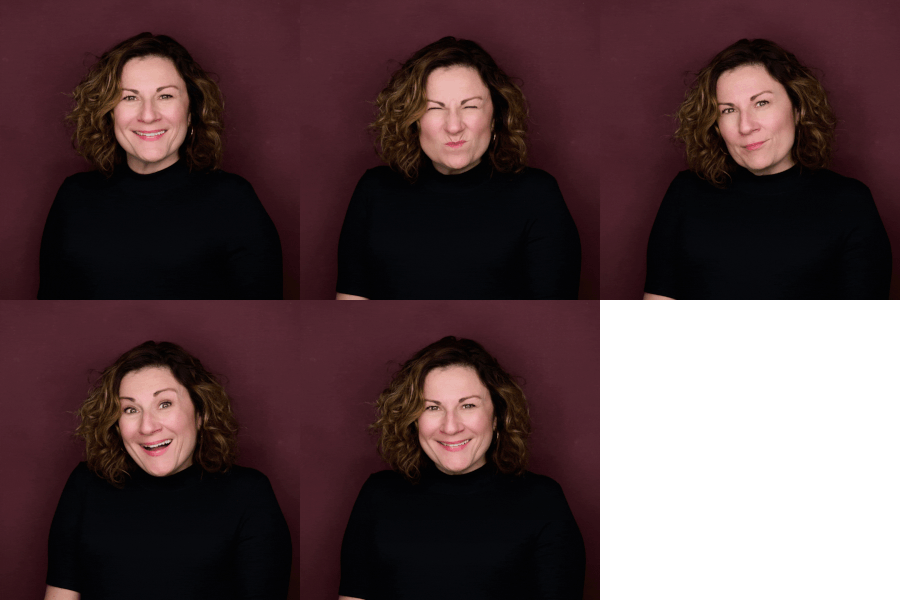
Do not do this. Practiced poses look practiced. What the camera responds to is genuine expression, genuine presence and a specific moment where something true is happening in your face.
My job is to create the conditions for that moment and to direct you into it. Your job is to show up rested, prepared and willing to be directed. Everything else is my side of the camera.
A Final Note on Camera Anxiety
Most people who sit down in my studio say some version of "I hate having my photo taken." That is not an obstacle to a great session. It is actually a useful starting point because it means you are not going to come in with fixed ideas about how you should look.
The direction I provide is specific enough that you will not feel lost, and relaxed enough that you will not feel stiff. Most clients tell me afterward that the experience was nothing like they expected.
If you are anxious about your session, the most useful thing you can do is arrive a few minutes early, give yourself time to settle and trust that direction is coming. The camera does not capture who you are afraid you look like. It captures who you actually are when someone knows how to look.
Ready to Book?
A detailed prep guide is sent with every booking confirmation so you arrive knowing exactly what to bring and what to expect.
Nina Pomeroy is a headshot and portrait photographer based in Pleasanton, California with 26 years of experience across two coasts. She photographs executives, entrepreneurs and professionals throughout the Tri-Valley and East Bay from her private studio in downtown Pleasanton.